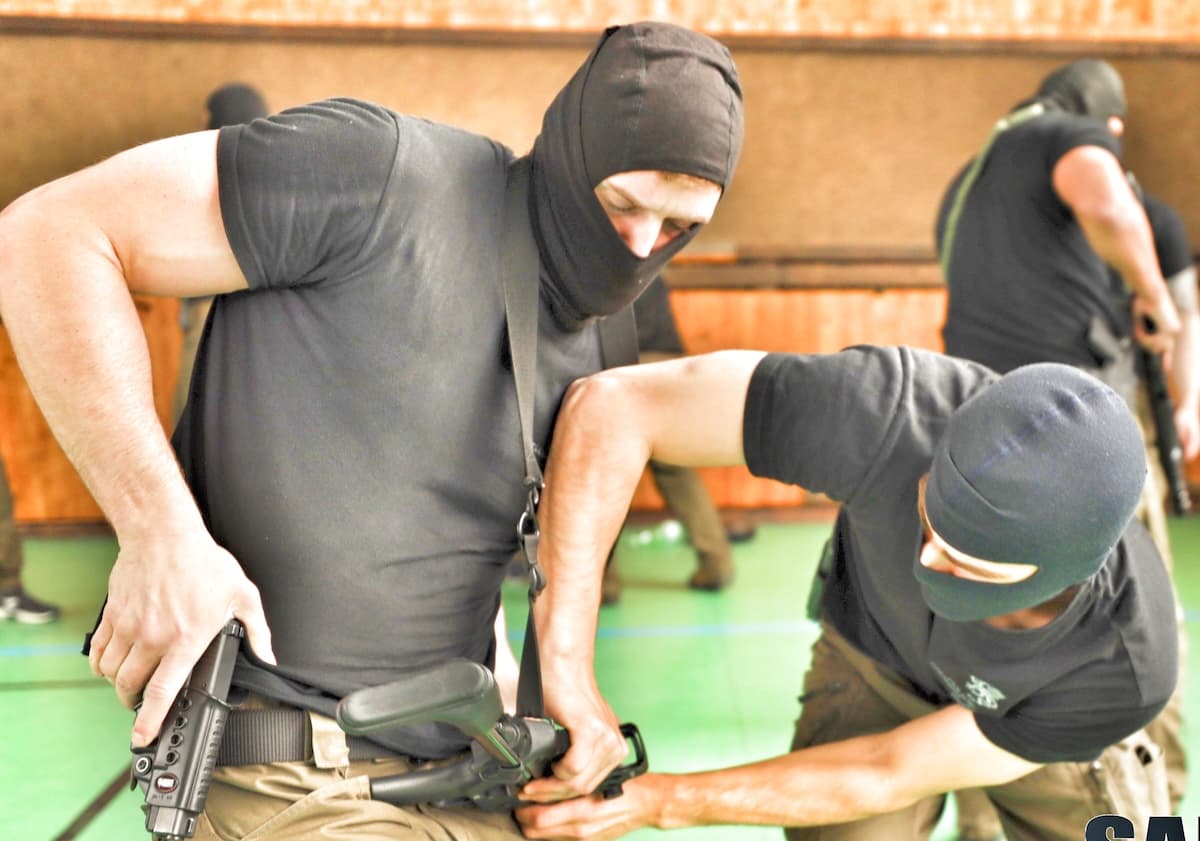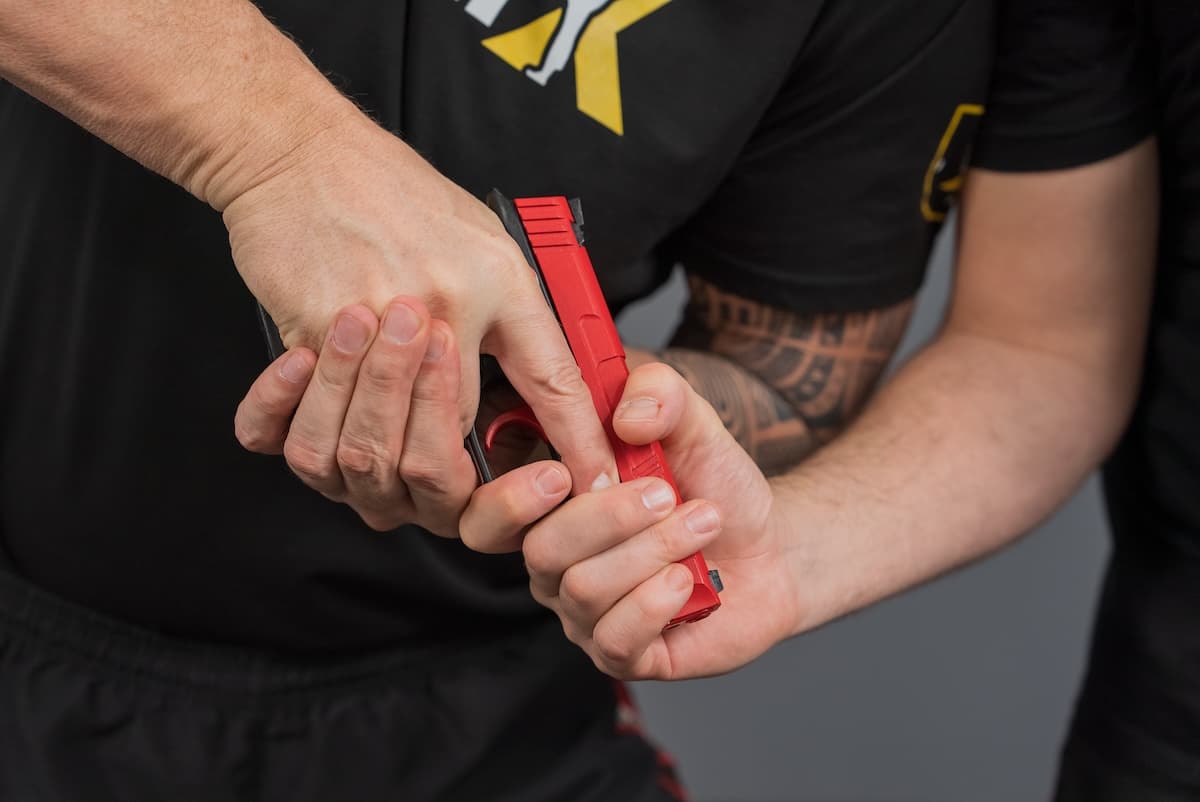
The most important parameters for training with teams:
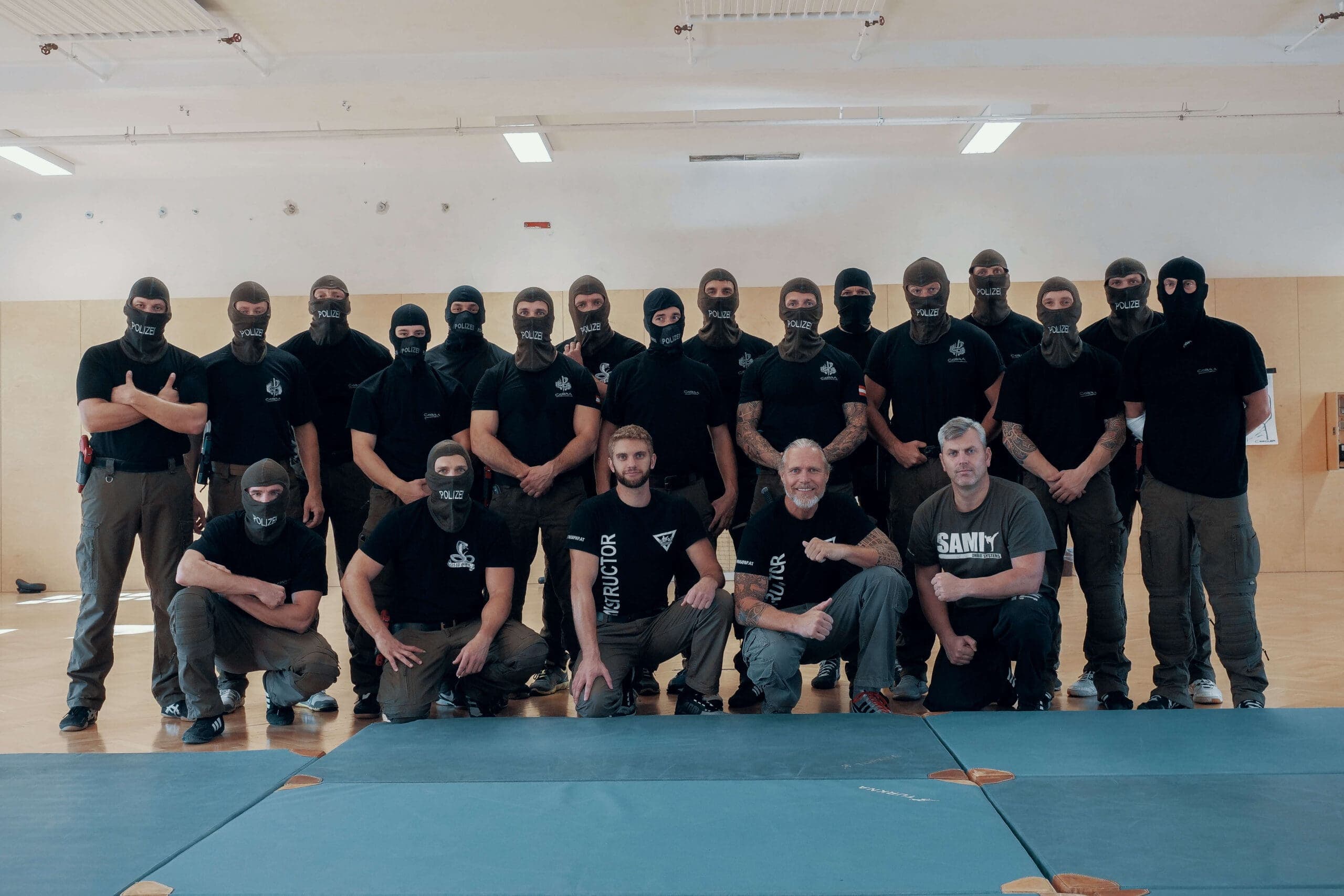
- Joint team training
- Simple structure of the system
- Few striking techniques (risk of injury, proportionality)
- Mission/objective – gaining control of a person (situation)
- Can be recalled under stress
- A simple concept
- Consideration of the initial situation (passive resistance, confined spaces, team coordination, apprehensions etc.)
- Transferability (with and without operational equipment)
- Modular structure
- Modern teaching methods
What does teamwork mean to us?
Teamwork means that work tasks are fulfilled and carried out simultaneously by several people. The sensible distribution of the individual tasks is what characterizes optimal teamwork.
Teamwork is relevant for the areas of communication, operational tactics, operational technique, pinning techniques, transport and tactical self-protection techniques.
Tactical team formations
An important element of teamwork is the optimal tactical positioning and formation of the team in relation to the possible aggressor(s). By acting purposefully from this formation, apprehension techniques and escort techniques can be optimally implemented as a team.
- L formation
- T formation
- V formation
- O formation (ring formation)
- Line formation
Team operational tactics
Operational tactics are understood to mean a planned, coordinated operation using verbal and physical means to enforce necessary measures. Important factors for implementation are strength (team), time, space and purpose.
Operational tactics include:
- Preparing the operation
- Tactics and strategy
- Team agreements / team language
- Officer safety / team protection
- Use of physical force
- Use of operational equipment
- Positioning within the team
- Escort techniques as a team
- Apprehension techniques as a team
- Restraint techniques as a team
- Transport techniques as a team
- Perception
- Information processing under stress
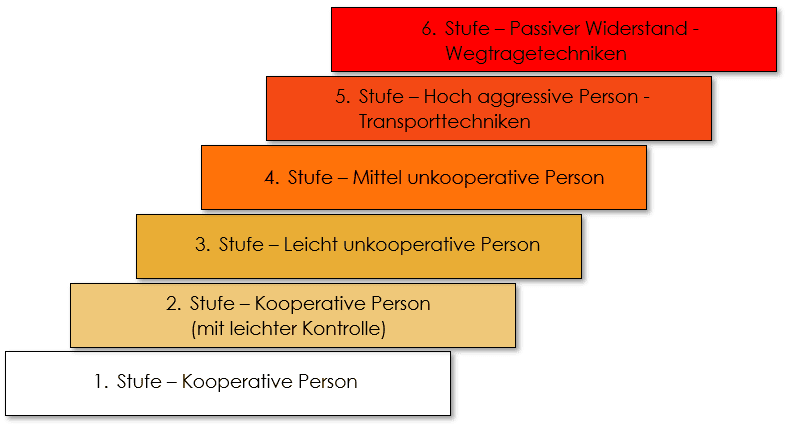
AN EXAMPLE – SAMI-X PRO – 6-STAGE ESCORT TECHNIQUES TABLE
The correct escort techniques when dealing with non-aggressive persons play an important role in teamwork (teaming). By escort techniques in SAMI-X PRO, we mean the tactical and optimal positioning when “escorting” and the correct grip of the security staff on non-aggressive persons. By acting purposefully from this escort position, apprehension techniques can be optimally implemented as a team in an emergency.
This controlled escorting is the prerequisite for acting safely with a lower risk for the security staff. The concept presented here distinguishes six different stages of the situation when dealing with persons. In SAMI-X PRO, we use escort techniques only up to stage 4. After that, transport techniques or carrying techniques are used. Each of these stages is an indispensable building block for dealing optimally with violence and aggression. According to the stage of aggression development, these stages can be represented as follows:
Questions about this topic or about our training?
Get in touch